- AI Business Summary
- Posts
- 🖥️ The Hardware Race: Compute Giants and Consumer AI Collide
🖥️ The Hardware Race: Compute Giants and Consumer AI Collide
This week's report backed by stats!

Welcome back to the AI Business Summary newsletter!
This week, we have more significant (and mostly positive) news in the world of AI.
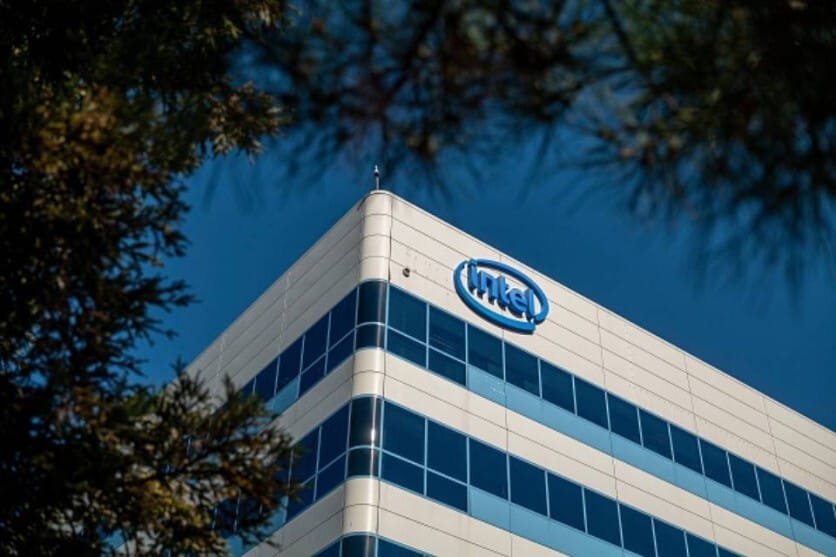
The Big Lead: Intel enters handheld gaming with Panther Lake chip to challenge AMD's dominance and capture the growing portable-device market.
Here’s everything else you need to know this week in AI...
In Today’s Issue:
🖥️ Intel builds a handheld gaming platform with a dedicated chip
🚀 xAI raises $6B for supercomputer vs OpenAI
🔬 DeepSeek unveils efficient AI training method
💻 Microsoft adds symbol-aware Copilot editing for C++
⚡ Claude Code builds Google's year-long system in one hour
🧠 Nadella: AI amplifies humans, builds agent systems
🏠 Samsung unveils AI companions for home living
🕶️ Meta delays Ray-Ban AI glasses global rollout
🔊 OpenAI overhauls audio for screenless devices
🖼️ Google tests Nano Banana 2 Flash image model
Last Time the Market Was This Expensive, Investors Waited 14 Years to Break Even

In 1999, the S&P 500 peaked. Then it took 14 years to gradually recover by 2013.
Today? Goldman Sachs sounds crazy forecasting 3% returns for 2024 to 2034.
But we’re currently seeing the highest price for the S&P 500 compared to earnings since the dot-com boom.
So, maybe that’s why they’re not alone; Vanguard projects about 5%.
In fact, now just about everything seems priced near all time highs. Equities, gold, crypto, etc.
But billionaires have long diversified a slice of their portfolios with one asset class that is poised to rebound.
It’s post war and contemporary art.
Sounds crazy, but over 70,000 investors have followed suit since 2019—with Masterworks.
You can invest in shares of artworks featuring Banksy, Basquiat, Picasso, and more.
24 exits later, results speak for themselves: net annualized returns like 14.6%, 17.6%, and 17.8%.*
My subscribers can skip the waitlist.
*Investing involves risk. Past performance is not indicative of future returns. Important Reg A disclosures: masterworks.com/cd.
Infrastructure & Compute Wars
🖥️ Intel builds a handheld gaming platform with a dedicated chip
Targets portable devices with Panther Lake processors.
First chips on the 18A process, production started in 2025.
Challenges AMD's dominance in the handheld gaming market.
More details coming later this year.
🚀 xAI raises $6B for supercomputer vs OpenAI
Fund the Gigafactory of Compute by fall 2025.
Backed by Sequoia, a16z, and Saudi investors.
Powers Grok's truth-seeking models.
Leverages X data for real-time training.
🔬 DeepSeek unveils efficient AI training method
Manifold-Constrained Hyper-Connections cuts compute needs.
Improves scalability, lowers energy demands.
Co-authored by founder Liang Wenfeng.
Boosts China's chip-constrained AI push.
Developer Tools & Enterprise AI
💻 Microsoft adds symbol-aware Copilot editing for C++
Handles multi-file refactors using compiler symbol data.
Public preview in Visual Studio 2026 Insiders.
Matches C# depth for project-wide changes.
Reduces errors on large C++ codebases.
⚡ Claude Code builds Google's year-long system in 1 hour
Generates distributed agent orchestrators from a prompt.
Google engineer: toy version matches prior work.
Evolves from lines to full codebases rapidly.
Feedback loops double output quality.
🧠 Nadella: AI amplifies humans, builds agent systems
Past discovery, now diffusion phase.
Focus on multi-model scaffolds with memory.
Deploy scarce compute for real impact.
Rejects job-killer fears, pushes levers.
Consumer Devices & AI Hardware
🏠 Samsung unveils AI companions for home living
Vision AI Companion enhances TVs with recipes and mood tuning.
Family Hub fridge tracks food via Google Gemini.
Bespoke appliances integrate across the ecosystem.
SmartThings hits 430M users.
🕶️ Meta delays Ray-Ban AI glasses global rollout
US demand creates waitlists into 2026.
Pauses UK, France, Italy, and Canada launches.
$799 model uses wristband neural controls.
EssilorLuxottica sees Q3 revenue boost.
🔊 OpenAI overhauls audio for screenless devices
Unifies teams for natural interruption handling.
Targets audio-first personal devices in 2026.
Jony Ive prioritizes reducing screen addiction.
Family of glasses, speakers as companions.
Models & Inference
🖼️ Google tests Nano Banana 2 Flash image model
Faster and cheaper than Nano Banana Pro.
Based on Gemini 3 Flash for low latency.
Suited for scaled visual content generation.
Advanced testing phase, rollout soon.
🌱 Bonus Thought
AI's sprint forward spotlights a brutal divide. Compute giants like xAI drop $6B on supercomputers, Intel races into gaming chips, and DeepSeek slashes training costs, fueling raw capability. Meanwhile, consumer plays Samsung fridges, Meta glasses, and OpenAI audio, pushing AI into daily life. Developers get Copilot overhauls and Claude agents that build systems in hours. Progress screams opportunity: faster models, cheaper inference, seamless hardware integration.
Yet risks mount just as fast. OpenAI's $555K "head of preparedness" hunt signals the flip side, cyber threats, mental health pitfalls, and self-improving systems that could spin out of control. Altman admits: models deliver breakthroughs but invite abuse. Reputational hits surge 46% in SEC filings; lawsuits tie ChatGPT to tragedies. Speed builds empires. Neglect safety, and cracks widen: biased data poisons trust, attackers exploit edges.
Infrastructure booms vs. governance lags. Enterprises win by pairing agent scaffolds with human oversight; Nadella's multi-model memory stacks demand it. Winners integrate now: audit compute pipelines, stress-test for harms, blend innovation with defense.
One truth holds: AI leverage goes to those ready for both the power and the peril.
📝 Business Prompt to Try
"Conduct a 'Human-in-the-Loop ROI Review.' For every function where AI assists (sales, ops, marketing, finance, etc.), chart three dimensions: (1) automation ratio — the % of decisions or tasks still requiring human input, (2) accuracy lift — measurable performance gain versus pre-AI baseline, and (3) human enablement value — how much the human role has upskilled (decision scope, strategic leverage, creativity). Identify tasks where human effort adds low value and automate them, but double down on roles where AI amplifies expert judgment. The outcome: a roadmap that balances machine scale with human insight, turning augmentation into compounding ROI."
Why It Works
Centers human capital in AI scaling: Quantifies where people create unique leverage versus redundancy, shifting the conversation from job loss to role evolution.
Shifts the automation narrative: Turns "replace" into "reallocate," strengthening trust and adoption across teams and leadership.
Links capability metrics to business outcomes: Clarifies which human-AI hybrids actually move revenue or efficiency KPIs, avoiding the 95% GenAI-projects-that-fail trap.
Builds resilience: Optimizes collaboration loops where human feedback improves models over time, protecting against black-box fragility and creating sustainable competitive advantage.
💡 Quote of the Week
What matters is not the power of any given model, but how people choose to apply it to achieve their goals